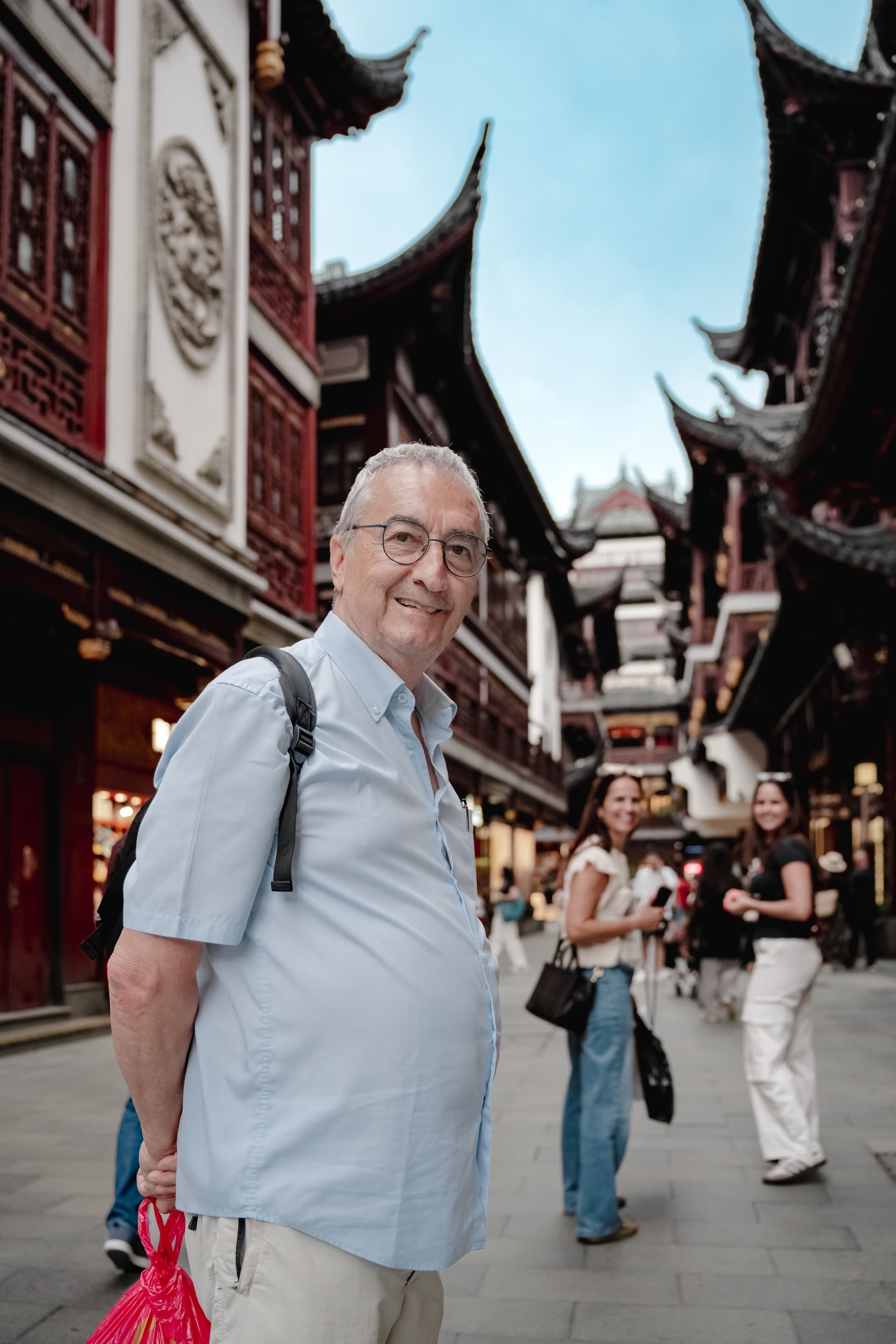
Two weeks is enough to eat properly in four regions without rushing. The route runs south-east the whole way, so no backtracking: Chengdu (Sichuan) → Xi'an (Shaanxi) → Shanghai (Jiangnan) → Guangzhou (Cantonese). Every leg is a high-speed train except the last, and every city has a food street you can walk to from your hotel.
Route at a glance
- Chengdu (4 days) — hotpot, panda base, teahouses, Jinli at night.
- 🚄 Chengdu → Xi'an — G-train, 3–4 h, the shortest and easiest leg.
- Xi'an (3 days) — Terracotta Army, biang-biang noodles, Muslim Quarter nights.
- 🚄 Xi'an → Shanghai — G-train, 6–7.5 h, or a sleeper if you want to save a night.
- Shanghai (4 days) — soup dumplings, food halls, Hangzhou tea villages.
- 🚄 Shanghai → Guangzhou — G-train 7–8 h via Shenzhen, or a 2 h flight if time is short.
- Guangzhou (3 days) — dim sum breakfasts, Shamian Island, Canton Tower.
Eat where the queue is
In China the reliable signal is a line of locals, not a review score. Pay with Alipay, order by pointing, and carry a little cash for stalls — set up Alipay with a foreign card before you fly.
Days 1–4 · Chengdu: Sichuan heat
- Day 1: land, set up data, then straight to a hotpot dinner. Order the divided pot (鸳鸯锅) — half mild — and ask for sesame oil dip.
- Day 2: Chengdu Research Base of Giant Panda Breeding before 09:00 (they are active and it is cool), then a teahouse afternoon in People's Park.
- Day 3: Jinli Ancient Street and Kuanzhai Alley for street snacks, plus a proper Sichuan lunch: mapo tofu, twice-cooked pork, dan dan noodles.
- Day 4: day trip to Leshan Giant Buddha or Mount Qingcheng; evening train or early departure to Xi'an.
Days 5–7 · Xi'an: wheat, not rice
- Day 5: arrive Xi'an North, check in inside the city wall, evening in the Muslim Quarter: roujiamo, biang-biang noodles, skewers, pomegranate juice.
- Day 6: Terracotta Army with an English guide — half a day out at Lintong. Back for a bike ride on the city wall at sunset.
- Day 7: Shaanxi History Museum (free, book ahead) and the Big Wild Goose Pagoda, then the evening G-train to Shanghai.
Days 8–11 · Shanghai: Jiangnan sweetness
- Day 8: soup dumplings for breakfast (xiaolongbao), then the Bund, Yu Garden and the old town.
- Day 9: French Concession walking day — Wukang Road, Tianzifang, a food hall for lunch, and a Huangpu cruise after dark.
- Day 10: day trip to Hangzhou (1 h by train): West Lake, Longjing tea village, a slow lunch by the water.
- Day 11: morning markets and a Shanghainese lunch (red-braised pork, shengjian bao), then the long train south or a flight.
Days 12–14 · Guangzhou: Cantonese dim sum
- Day 12: dim sum breakfast — this is the city's whole point. Shamian Island in the afternoon, Pearl River at night.
- Day 13: Chen Clan Ancestral Hall, then a Cantonese dinner: roast goose, white-cut chicken, steamed fish. Night market for dessert.
- Day 14: Canton Tower or the Guangdong Museum, last dim sum, then Hong Kong by through-train or a direct flight home.
Book the trains
Four legs this time. Book Chengdu → Xi'an and Xi'an → Shanghai first; those are the ones that sell out. Passport = ticket, so the name must match exactly, and arrive 45–60 minutes early.
Chengdu → Xi'an high-speed rail
G-train, 3–4 hours across the Qinling mountains. Morning departures give you a full evening in Xi'an.
Check train times & prices → Affiliate link Train · Leg 2Xi'an → Shanghai high-speed rail
G-train, 6–7.5 hours to Shanghai Hongqiao. Business class is worth it on this one.
Check train times & prices → Affiliate linkWhere to stay
Hotels near Chunxi Road
Four nights, walking distance to hotpot, teahouses and the metro to the panda base.
See Chengdu hotels → Affiliate link Hotel · Xi'anHotels inside the city wall
Three nights, five minutes from the Muslim Quarter food street.
See Xi'an hotels → Affiliate link Hotel · ShanghaiHotels near the Bund & the French Concession
Four nights, metro line 2 or 10 at the door, direct to both railway stations.
See Shanghai hotels → Affiliate link Hotel · GuangzhouHotels near Shamian Island
Three nights, quiet streets, ten minutes to the classic dim sum houses.
See Guangzhou hotels → Affiliate linkExperiences worth booking ahead
Panda base with early entry
Get in before the crowds and the heat — pandas are only active in the cool morning hours.
Check availability → Affiliate link Food tour · ChengduSichuan street-food crawl
A local guide takes you through the dishes you cannot order by pointing. Hotpot included.
Check availability → Affiliate link Day trip · ShanghaiHangzhou & Longjing tea village
Round-trip bullet train, West Lake boat and a tea-growers' lunch in the hills.
Check availability → Affiliate link Experience · GuangzhouCanton Tower & Pearl River cruise
The city from 450 m, then the river at night. Book a combined ticket to save queueing twice.
Check availability → Affiliate link⚠ What trips people up on this route
- Spice is cumulative. Chengdu first is deliberate — by Shanghai your palate gets a break. Ask for 微辣 (mild) and mean it.
- Payments are QR-first. Street stalls often take Alipay only; set it up at home and keep ¥200–500 in cash as backup.
- Data every day. Fourteen days of maps, translation and Didi needs a proper data plan — see the eSIM guide.
- Book the panda base and Terracotta Army early. Both are real-name, both sell out at weekends.
- September–December is the sweet spot. Cooler, and the autumn food is the best of the year.
Shorter trip, first time in China?
The 10-day Classic Loop (Beijing → Xi'an → Shanghai) covers the headline sights with less travel.