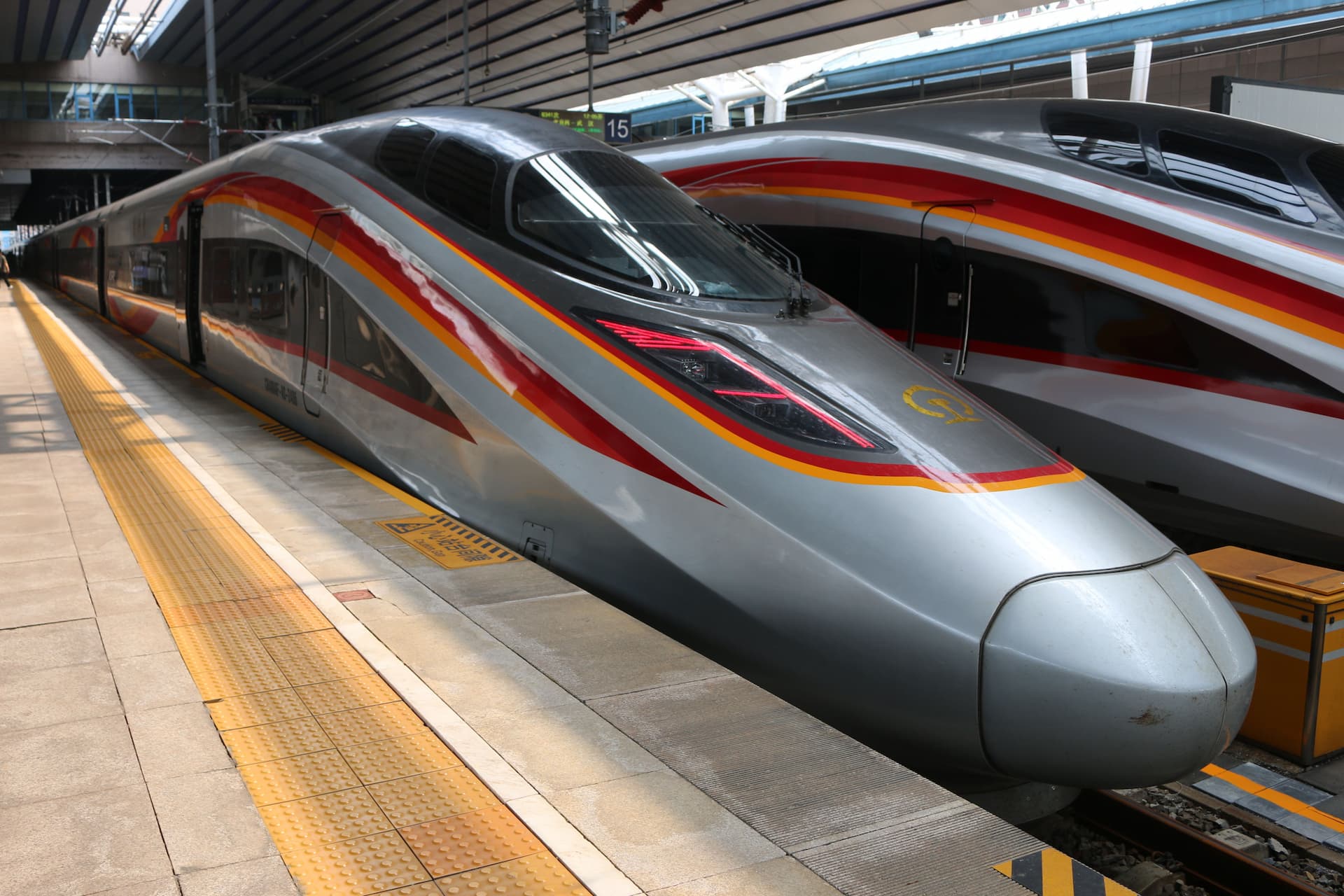
China’s high-speed rail network (CRH) is a marvel. It connects almost every major city, travels at 350 km/h, and is almost always perfectly on time.
But if you’ve looked at train travel in China before, you might have heard horror stories about needing a Chinese ID card to buy tickets or swipe through the gates. Relax. As a foreigner, it’s actually incredibly easy once you know the right steps.
Here is the exact process I use to book and ride the bullet trains across China.
Step 1: Booking Your Tickets (Don’t use the official app)
The official China Railway app (12306) now has an English version, but it can still be glitchy for foreign credit cards.
The pro move
Book on a third-party platform such as Trip.com or Klook. They take foreign cards reliably and show the same seat inventory as 12306.
- Enter your departure city (e.g. Beijing) and destination (e.g. Shanghai).
- Select your date and time.
- Add your passport number as your ID — double-check it, it must match your passport exactly.
- Pay with your Visa, Mastercard, or Amex.
Note: you don’t need a physical ticket. Your passport is your ticket.
Step 2: Entering the Train Station
Chinese train stations are massive — think airport terminals. Arrive 45–60 minutes early. You will need time to clear security and find your gate.
- Security check: put your bags through the scanner. If you carry a power bank, make sure the capacity (mAh) is clearly printed on it — China has strict rules on this.
- The turnstiles (the tricky part): you will see automated gates where locals just swipe their ID cards. Do not try to swipe your passport on the scanner. Look to the far left or far right — there is always a Manual Verification Lane (人工通道). A station attendant will check your passport and open the gate for you.
Step 3: Finding Your Gate and Boarding
- Find your train number (e.g. G1, G7) on the giant departure boards and go to the assigned waiting area.
- Boarding usually starts 15 minutes before departure and closes 5 minutes before. Don’t be late — the doors literally lock shut.
- When the gate opens, join the queue. Again, use the manual lane and show your passport to the attendant to reach the platform.
Step 4: The Onboard Experience
- Seat classes: Second Class (3+2 seating, like economy), First Class (2+2, very comfortable), and Business Class (lie-flat pods — extremely expensive, but cool).
- Luggage: overhead racks for small bags, racks at the end of the carriage for large suitcases. No one weighs your bags.
- Food: there is a dining car, but it’s basic. Grab snacks and coffee at the station before you board.
- Power: every seat has a charging outlet — bring a universal adapter if your plug isn’t the Chinese Type I/A shape.
⚠ Crucial Tips Before You Ride
- Your passport is your ticket. Never put it in your checked luggage. Keep it in your pocket.
- Are you transiting? If you are using the 144-Hour Visa-Free Transit, keep your onward flight or train ticket printed out to show immigration.
- Pick the right station. Beijing has several — Beijing South, Beijing West, Beijing Capital. Double-check which one your train leaves from.
Planning the route
Once the trains are sorted, the Classic Loop and Deep Dive itineraries show which legs to book and how many nights to stay in each city.